

Disc Medicine Inc. stocks have been trading up by 29.87 percent following highly positive sentiment around its latest clinical trial progress.
Key Takeaways
- Disc Medicine (IRON) plans a corporate webcast to review topline results from its APOLLO Phase 3 trial of bitopertin in erythropoietic protoporphyria (EPP).
- The APOLLO study is flagged as a core program in Disc Medicine’s hematology-focused pipeline and a major value driver for IRON.
- No efficacy or safety numbers are out yet, but the webcast timing tells traders that a pivotal data readout for IRON is imminent and volatility is already rising.
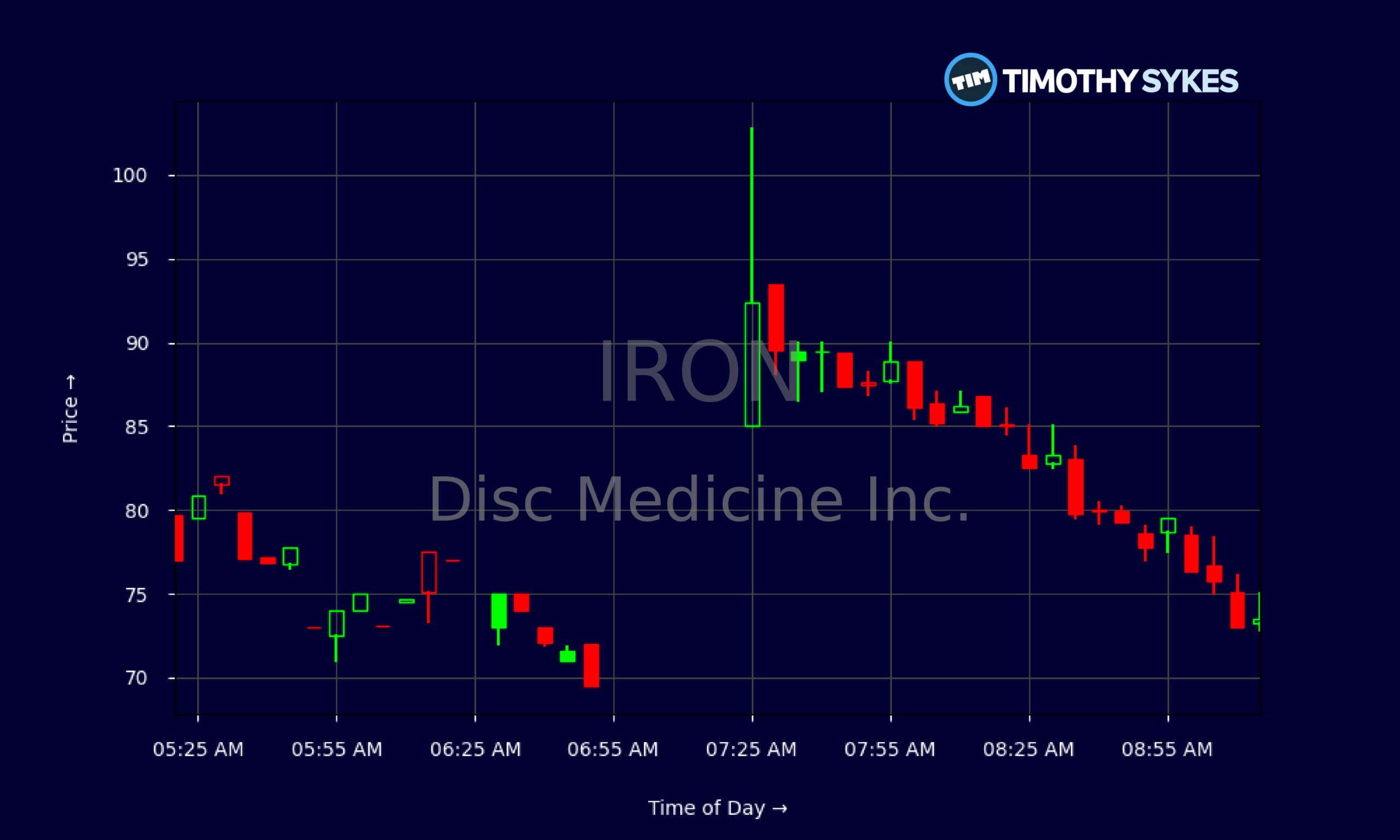
Live Update At 09:18:35 EDT: On Monday, October 19, 2026 Disc Medicine Inc. stock [NASDAQ: IRON] is trending up by 29.87%! Discover the key drivers behind this movement as well as our expert analysis in the detailed breakdown below.
Quick Financial Overview
Disc Medicine, trading under ticker IRON, looks exactly like what it is: a development‑stage biotech with one huge catalyst on deck and plenty of cash to get there. The daily chart shows IRON pulling back from the mid‑$60s in late September 2026 to the mid‑$50s before bouncing, a typical digestion phase after a strong run. That base is now the launchpad.
On the tape, IRON’s intraday action around the webcast news is wild. Pre‑market prints jump from the high $60s to above $90 before fading back into the $70s. That’s classic catalyst-style trading: wide ranges, liquidity spikes, and plenty of room for both breakouts and brutal reversals.
More Breaking News
Under the hood, Disc Medicine reports roughly $717.7M in cash and short‑term investments and about $90.9M in total liabilities. A current ratio above 24 and long‑term debt near $59.3M give IRON solid financial staying power despite a quarterly net loss of about $59.5M and negative free cash flow of roughly $44.2M. For traders, that balance sheet means one thing: runway. IRON can afford to get APOLLO data out without an obvious near‑term cash crunch, which keeps the focus firmly on the upcoming bitopertin readout.
Why Traders Are Watching IRON So Closely
IRON is front and center for momentum traders because the story is clean and the catalyst is binary. Disc Medicine told the market it will host a corporate webcast dedicated to topline results from the APOLLO Phase 3 trial of bitopertin in erythropoietic protoporphyria. Management does not schedule a special webcast like that for a minor update. This is about a key asset in a focused hematology pipeline, and the company is telegraphing exactly when the spotlight will hit.
For short‑term traders, IRON’s price action already reflects that setup. The stock ripped in pre‑market from the $60s into the $90s, then swung in a huge range from about $69 to just over $102 before settling back into the $70s. That’s textbook “event run-up” behavior. Volatility is expanding, range is widening, and volume is concentrating around every headline mentioning IRON and APOLLO.
Fundamentally, Disc Medicine is still losing money by design. The latest quarter shows about $46.9M in research expense and $18.1M in general and administrative costs driving a loss, while cash is being recycled between short‑term investments and the bank account. Traders in IRON are not paying for current profits; they are trading the probability that APOLLO’s bitopertin data can unlock future revenue and re-rate the entire company.
Because no efficacy or safety data from APOLLO are out yet, sentiment in IRON is speculation, not certainty. That’s where disciplined traders thrive. The webcast date becomes a hard line on the calendar, and every candle in IRON between now and then is a vote on how the crowd wants to be positioned into that binary event.
Conclusion
For active traders, IRON checks every box of a classic catalyst play: clear ticker, defined event, strong pre‑event trend, and expanding volatility. Disc Medicine has cash in the bank, a focused hematology story, and one headline everyone cares about—the APOLLO Phase 3 topline results for bitopertin in EPP that will be unveiled on the upcoming corporate webcast. Until that data hits, every move in IRON is about expectations.
The financials show why this matters so much. Disc Medicine is burning cash, posting negative returns on equity and assets while funneling tens of millions into research. With book value per share near $16.78 and IRON trading several times above that, the market is already pricing in real potential from the pipeline. APOLLO is central to that belief.
That is why traders need to stay sharp. IRON offers opportunity, but it also carries real risk around the data. As Tim Sykes likes to say, “Preparation plus discipline beats hope every single time.” As millionaire penny stock trader and teacher Tim Sykes, says, “Small gains add up over time; focus on building wealth gradually, not chasing jackpots.”. For anyone trading IRON into the webcast, that means knowing the levels, respecting the volatility, and being ready to cut losses fast if the APOLLO story does not match the hype. This article is for educational and research purposes only and is not investment advice.
This is stock news, not investment advice. Timothy Sykes News delivers real-time stock market news focused on key catalysts driving short-term price movements. Our content is tailored for active traders and investors seeking to capitalize on rapid price fluctuations, particularly in volatile sectors like penny stocks. Readers come to us for detailed coverage on earnings reports, mergers, FDA approvals, new contracts, and unusual trading volumes that can trigger significant short-term price action. Some users utilize our news to explain sudden stock movements, while others rely on it for diligent research into potential investment opportunities.
Dive deeper into the world of trading with Timothy Sykes, renowned for his expertise in penny stocks. Explore his top picks and discover the strategies that have propelled him to success with these articles:
- Penny Stocks Trading Guide
- Best Penny Stocks Under $1 to Buy Today
- Top 8 Penny Stocks to Watch on Robinhood
Once you’ve got some stocks on watch, elevate your trading game with StocksToTrade the ultimate platform for traders. With specialized tools for swing and day trading, StocksToTrade will guide you through the market’s twists and turns.
Dig into StocksToTrade’s watchlists here:





Leave a reply