

Pacific Biosciences of California Inc. stocks have been trading up by 8.15 percent amid strong optimism over its genomic sequencing advances.
Key Takeaways
- Multi‑year Verily Health collaboration puts PacBio HiFi long‑read sequencing inside a governed cloud and AI platform built for population‑scale clinico‑genomic datasets.
- Pacific Biosciences says the Verily deal targets complex long‑read programs across research, biopharma, and population genomics, pointing to a long runway of potential demand.
- A separate TychoBio collaboration embeds PacBio HiFi and Kinnex long‑read RNA sequencing into AI drug discovery workflows on more than 10,000 samples for rare‑disease therapeutics.
- Pacific Biosciences of California expects TychoBio’s full‑length RNA datasets to train AI models that design and evaluate next‑generation RNA therapies.
- PACB has set its Q3 2026 earnings call date, where traders will look for early signs of revenue traction from these AI‑driven collaborations.
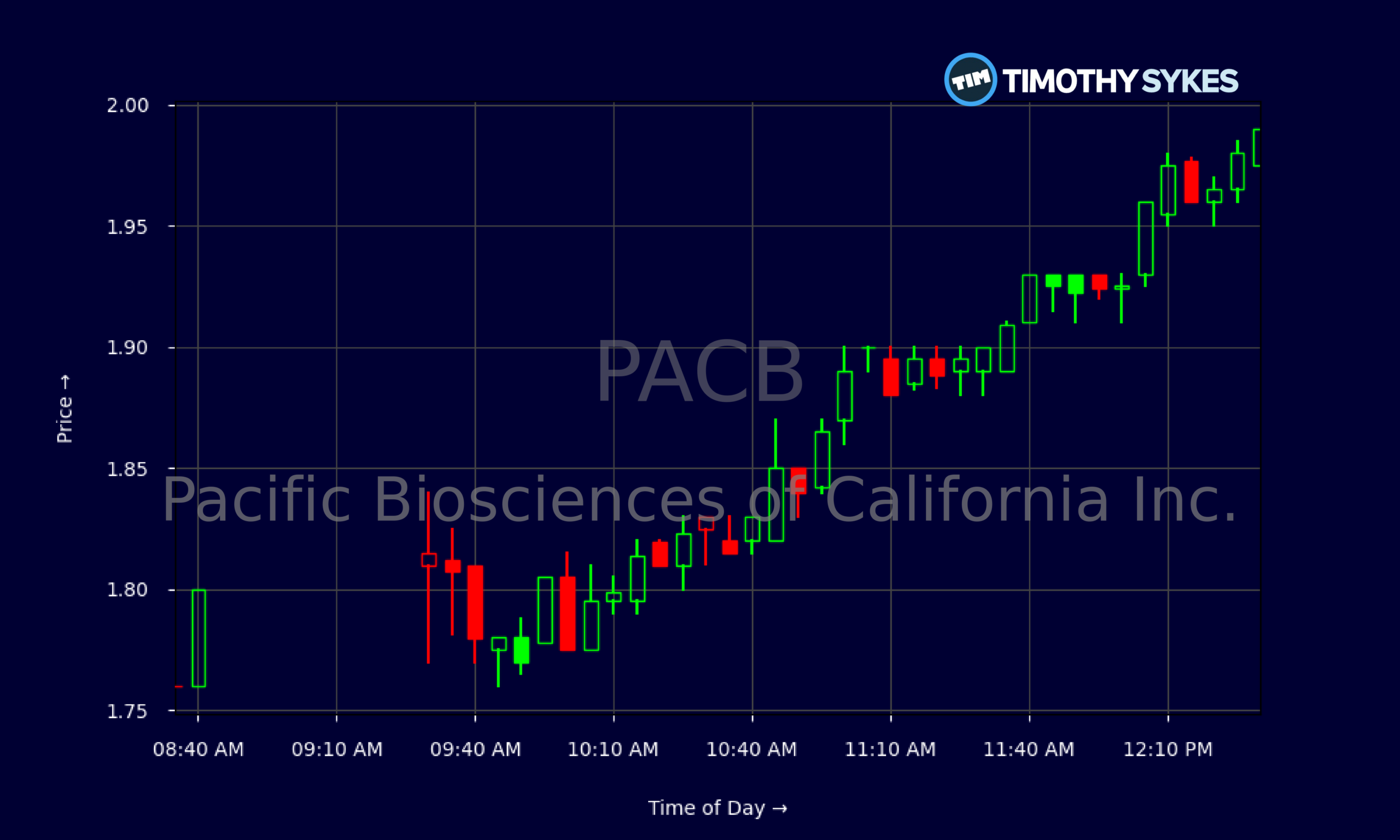
Live Update At 12:32:50 EDT: On Tuesday, October 20, 2026 Pacific Biosciences of California Inc. stock [NASDAQ: PACB] is trending up by 8.15%! Discover the key drivers behind this movement as well as our expert analysis in the detailed breakdown below.
Quick Financial Overview
PACB has been acting like a classic beaten‑down spec name trying to base. Over the last few weeks, Pacific Biosciences of California has swung from $1.57 on 2026/09/25 to a recent close at $1.99 on 2026/10/20. That’s a sharp bounce off the late‑September lows, but still well below the $3.43 intraday spike on 2026/10/06, when PACB briefly attracted momentum traders before fading hard.
Intraday on the latest session, PACB traded in a tight channel from roughly $1.77 at the open to $1.99 into midday, with a steady staircase of higher lows from 09:45 onward. That grind suggests dip buyers are quietly accumulating, not chasing. For short‑term traders, $1.75–$1.80 is now the key support zone, with $2.10–$2.30 overhead resistance from earlier this month.
More Breaking News
Fundamentally, Pacific Biosciences is still deep in growth‑mode burn. Quarterly revenue sits near $39.0M, with an EBIT margin around ‑77% and profit margin near ‑82%. Cash and short‑term investments of about $236.9M versus a current ratio of 4.9 give PACB some runway, but free cash flow was roughly ‑$39.2M last quarter. That combination keeps PACB squarely in “story stock” territory where news and partnerships can move the chart faster than traditional valuation metrics.
Why Traders Are Watching PACB’s AI Genomics Pivot
Traders care about catalysts. PACB just dropped two of the cleanest narrative catalysts you’ll see in a speculative biotech tools name: a multi‑year Verily Health collaboration and a large‑scale TychoBio AI drug discovery deal.
The Verily news is the headline driver. PacBio and Verily plan to tightly integrate PacBio HiFi long‑read sequencing workflows into Verily’s governed cloud and multimodal health data platform. In plain English, that means PACB’s technology becomes part of the plumbing behind AI‑ready clinico‑genomic datasets at population scale. For traders, “population scale” and “multi‑year” scream potential recurring volume rather than a one‑off pilot.
Pacific Biosciences has also highlighted that the Verily collaboration is designed to expand into complex long‑read programs across biopharma, academic research, and population genomics. That breadth matters. It implies PACB can touch multiple budgets and use‑cases: pharma discovery, national genomics efforts, and hospital‑linked research. Even before exact dollars show up in earnings, this kind of visibility often supports sentiment and keeps traders watching every headline.
The TychoBio deal adds a second leg to the PACB story. TychoBio will run more than 10,000 samples on PacBio’s HiFi and Kinnex long‑read RNA platforms to generate full‑length RNA datasets for AI models that design and evaluate RNA therapies, especially for rare diseases. That scale suggests real instrument usage and consumables pull‑through over time.
More important, it signals that PACB is not just a DNA readout vendor. Pacific Biosciences of California is positioning its long‑read platforms as core data engines for AI‑first biotech companies. For momentum traders, that “AI + genomics + rare disease” combo is exactly the kind of narrative that can fuel sharp moves when volume shows up.
Conclusion
PACB sits at an interesting crossroads: ugly current financials, but increasingly strong strategic placement. The latest quarter shows about $39.0M in revenue against more than $44.7M in net loss, and free cash flow deep in the red. Stockholders’ equity is negative on paper, and return on assets is meaningfully below zero. On pure fundamentals, Pacific Biosciences of California is still a high‑risk biotech tools play that must grow into its story.
But markets trade the future, not the past. The Verily collaboration gives PACB a shot at becoming embedded in one of the more ambitious AI‑health data platforms out there, spanning biopharma, research, and population genomics. The TychoBio collaboration reinforces the idea that PacBio’s HiFi and Kinnex long‑read technologies are becoming a preferred source for high‑quality RNA and DNA data to train powerful AI models.
Traders now have a clear roadmap: watch price action into the upcoming Q3 2026 earnings call, listen for any color on early Verily and TychoBio traction, and track whether PACB can defend that $1.75–$1.80 support band. As Tim Sykes loves to say, “The market rewards prepared traders, not hopeful gamblers.” As millionaire penny stock trader and teacher Tim Sykes, says, “The goal is not to win every trade but to protect your capital and keep moving forward.”. For PACB, that means coming in with a plan, respecting your risk, and letting the chart confirm whether these AI genomics headlines turn into a sustained trend or just another speculative spike. This coverage is strictly for educational and research purposes, not investment advice.
This is stock news, not investment advice. Timothy Sykes News delivers real-time stock market news focused on key catalysts driving short-term price movements. Our content is tailored for active traders and investors seeking to capitalize on rapid price fluctuations, particularly in volatile sectors like penny stocks. Readers come to us for detailed coverage on earnings reports, mergers, FDA approvals, new contracts, and unusual trading volumes that can trigger significant short-term price action. Some users utilize our news to explain sudden stock movements, while others rely on it for diligent research into potential investment opportunities.
Dive deeper into the world of trading with Timothy Sykes, renowned for his expertise in penny stocks. Explore his top picks and discover the strategies that have propelled him to success with these articles:
- Penny Stocks Trading Guide
- Best Penny Stocks Under $1 to Buy Today
- Top 8 Penny Stocks to Watch on Robinhood
Once you’ve got some stocks on watch, elevate your trading game with StocksToTrade the ultimate platform for traders. With specialized tools for swing and day trading, StocksToTrade will guide you through the market’s twists and turns.
Dig into StocksToTrade’s watchlists here:





Leave a reply