

Recursion Pharmaceuticals Inc. stocks have been trading up by 3.85 percent after upbeat AI-driven drug discovery progress boosted investor optimism.
Key Takeaways
- Encouraging TUPELO trial data for REC-4881 showed meaningful GI polyp reductions and durable benefit in familial adenomatous polyposis, with safety in line with MEK1/2 inhibition.
- Early Phase 1 data for molecular glue REC-1245 produced three partial responses and a 91.7% disease control rate in heavily pretreated solid tumors, with a clean safety profile and plans to expand in endometrial cancer.
- Sanofi exercised its option on the first AI-discovered inflammatory candidate from the Recursion collaboration, paying a $10M milestone and lining up over $300M in potential future milestones plus royalties into 2027 and beyond.
- A $200M, oversubscribed equity raise at $3.25 per share extended RXRX’s cash runway into 2029, even as it adds dilution.
- ARK Investment Management, led by Cathie Wood, has repeatedly bought large RXRX blocks, while Morgan Stanley nudged its price target from $5.30 to $5.90 with an Equal Weight rating.
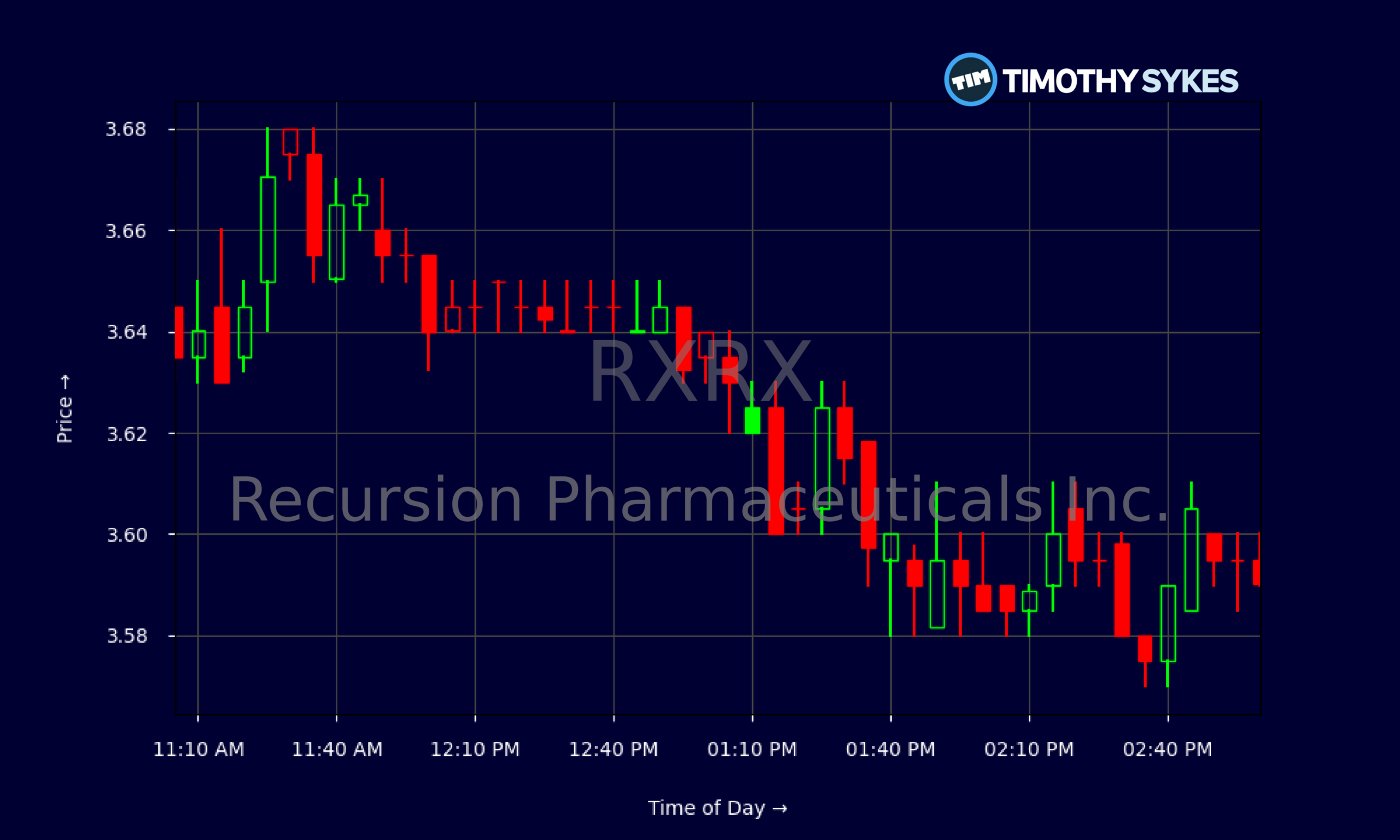
Live Update At 15:03:00 EDT: On Monday, October 19, 2026 Recursion Pharmaceuticals Inc. stock [NASDAQ: RXRX] is trending up by 3.85%! Discover the key drivers behind this movement as well as our expert analysis in the detailed breakdown below.
Quick Financial Overview
RXRX has been trading like a biotech rollercoaster. Over the past few weeks, Recursion Pharmaceuticals has swung between about $3.44 and $5.19, with the latest close near $3.59 after a sharp pullback from $4.16. That drop came right after a 15.4% jump to $4.32 on heavy buying, a classic sign of momentum traders piling in and then locking in profits.
Intraday, RXRX is now grinding in a tight range around $3.55–$3.65, with clean, controlled five‑minute candles and little panic. That tells traders supply from the $3.25 follow‑on deal is being absorbed, but there is no aggressive chase yet.
More Breaking News
Fundamentals show why Recursion is still a high‑beta trading vehicle, not a steady compounder. Revenue is only about $74.3M annually, while profit margins are deeply negative and free cash flow sits around -$108M in the latest quarter. On the flip side, RXRX runs with very low debt, strong liquidity (current ratio around 5), and more than $500M in cash, which—plus the new $200M raise—pushes its runway out to 2029. For traders, that means dilution risk just reset lower and the core game here is now clinical and partnership news flow, not survival.
Why Traders Are Watching RXRX Right Now
RXRX is back on watchlists because the story finally moved from “AI hype” to concrete clinical and deal catalysts. Recursion Pharmaceuticals reported Phase 1b/2 TUPELO data for REC‑4881 in familial adenomatous polyposis that showed substantial cuts in GI polyp burden and, importantly, benefit that persisted after treatment stopped. For traders, that kind of durability signal, combined with tolerable MEK1/2‑class safety, starts to de‑risk the asset and supports a higher probability that larger studies get funded.
On the oncology side, Recursion’s molecular glue REC‑1245 targeting RBM39 posted three partial responses and a 91.7% disease control rate at ≥45 mg QD in heavily pretreated solid tumors. That is eye‑catching for a first‑in‑human program and gives RXRX something real to talk about in endometrial cancer, where dose‑expansion is planned. Early, yes, but this is the type of data traders look for when they hunt for asymmetric upside.
Layer on the Sanofi deal, and the RXRX setup changes again. Sanofi exercised its option on the first AI‑discovered inflammatory candidate, triggering a $10M milestone and lifting total collaboration payments to $144M so far. Recursion remains eligible for more than $300M in additional milestones plus low double‑digit royalties, with Phase 1 work planned for 2027. That is third‑party validation from a major pharma, not just internal marketing.
To fund this pipeline, Recursion raised $200M at $3.25 in an oversubscribed follow‑on and underwritten offering of 61.54M Class A shares. Yes, that is dilutive, and it helped pull RXRX down from recent highs. But the fact that high‑quality healthcare funds filled the book tells traders that bigger money is willing to underwrite the long‑term AI drug discovery bet.
Conclusion
The tape is confirming that bigger players are paying attention to RXRX. Cathie Wood’s ARK Investment Management has stepped in three separate times—buying 1.5M, 1.9M, and then 4.2M shares in single trading days. That kind of repeat, high‑volume buying often acts like a magnet for momentum and quant funds scanning for liquid AI‑biotech themes. Add Morgan Stanley’s price‑target lift to $5.90 (even with an Equal Weight stance), and you have a name moving from forgotten to front‑burner.
Strategically, Recursion Pharmaceuticals is trying to build an integrated AI drug discovery powerhouse. The company has rolled up Exscientia, Cyclica, and Valence to deepen its protein and molecular design stack, aiming to be a consolidator in an AI protein engineering market projected to grow from $1.44B in 2026 to $3.82B in 2031. If software and platforms take more than 75% of that market as forecast, RXRX wants to be one of the toll booths.
For active traders, that sets up a classic high‑risk, high‑reward scenario. Clinical readouts for REC‑4881 and REC‑1245, plus future Sanofi milestones, are likely to drive the next big legs up or down. The fresh $200M cash cushion means Recursion can keep swinging without tapping markets again soon, but the company still burns a lot of money and has no near‑term profits.
This content is for educational and research purposes only. As Tim Sykes likes to say, “Patterns repeat, but you have to manage risk every single time.” As millionaire penny stock trader and teacher Tim Sykes, says, “Embrace the journey, the ups and downs; each mistake is a lesson to improve your strategy.”. With RXRX, the pattern right now is clear: rising institutional interest, stronger balance sheet, and real clinical signals—wrapped inside a volatile AI‑biotech chart that rewards disciplined traders and punishes anyone who overstays the move.
This is stock news, not investment advice. Timothy Sykes News delivers real-time stock market news focused on key catalysts driving short-term price movements. Our content is tailored for active traders and investors seeking to capitalize on rapid price fluctuations, particularly in volatile sectors like penny stocks. Readers come to us for detailed coverage on earnings reports, mergers, FDA approvals, new contracts, and unusual trading volumes that can trigger significant short-term price action. Some users utilize our news to explain sudden stock movements, while others rely on it for diligent research into potential investment opportunities.
Dive deeper into the world of trading with Timothy Sykes, renowned for his expertise in penny stocks. Explore his top picks and discover the strategies that have propelled him to success with these articles:
- Penny Stocks Trading Guide
- Best Penny Stocks Under $1 to Buy Today
- Top 8 Penny Stocks to Watch on Robinhood
Once you’ve got some stocks on watch, elevate your trading game with StocksToTrade the ultimate platform for traders. With specialized tools for swing and day trading, StocksToTrade will guide you through the market’s twists and turns.
Dig into StocksToTrade’s watchlists here:





Leave a reply