

SoFi Technologies Inc. stocks have been trading up by 2.94 percent after upbeat earnings and stronger-than-expected member growth.
Key Takeaways
- SoFi Bank is shifting its entire $25B card program onto blockchain settlement using its own SoFiUSD stablecoin, live across Mastercard’s global network as a first for a U.S. national bank.
- The SoFi Technologies–Mastercard rollout makes SoFiUSD the first nationally chartered bank stablecoin operating across a major global payments network, adding regulatory credibility and narrative fuel for SOFI.
- SOFI posted record Q2 2026 net revenue of $1.2B and net income of $157M, with members up 35% and products up 42%, while pushing deeper into digital assets and private markets.
- StoneX kicked off coverage of SoFi Technologies with a Buy rating and a $25 price target, leaning into 40%+ adjusted revenue growth and record user metrics despite SOFI being down about 40% year-to-date.
- Goldman Sachs and TD Cowen trimmed price targets to $15 and $17.50 with Neutral/Hold ratings, signaling caution on near-term upside even as the growth story around SOFI remains intact.
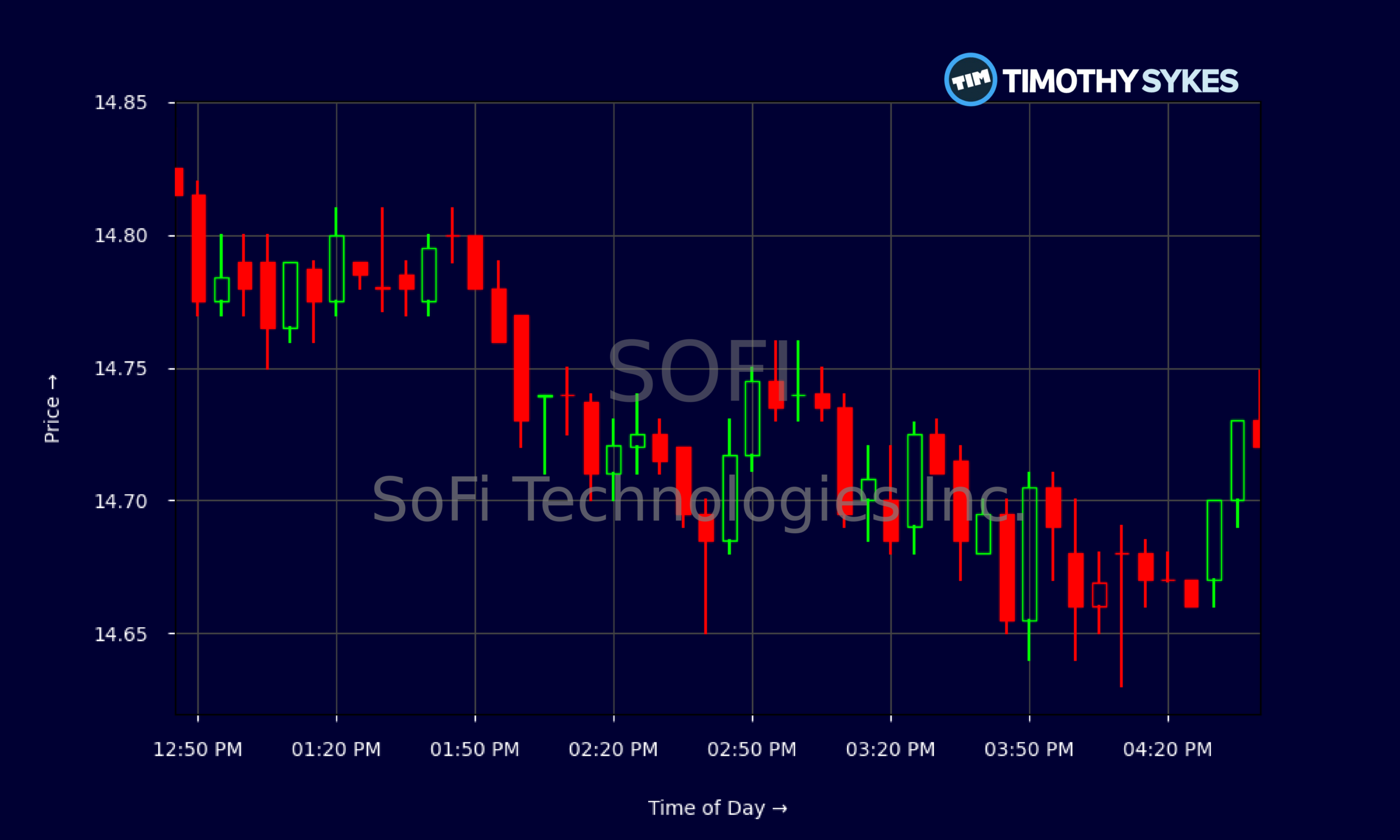
Live Update At 16:47:01 EDT: On Tuesday, October 20, 2026 SoFi Technologies Inc. stock [NASDAQ: SOFI] is trending up by 2.94%! Discover the key drivers behind this movement as well as our expert analysis in the detailed breakdown below.
Quick Financial Overview
SOFI has quietly turned into a real earnings story. In Q2 2026, SoFi Technologies printed record net revenue of $1.2B and net income of $157M. For a name that used to be a “future profits” narrative, those are heavy numbers. Member counts climbed 35% year over year, while total products jumped 42%, showing that existing users are layering on more services inside the SoFi app.
The stock, though, has been choppy. SOFI has slid from the mid‑$16s in late September to around $14.68 recently. That’s a pullback of roughly 11% over a few weeks, even as fundamentals improved. The intraday tape shows tight action between $14.60 and $14.80, which tells traders there’s a short-term equilibrium forming after the drop.
More Breaking News
On the fundamentals side, SOFI trades at a price-to-sales ratio near 4.7 and a P/E around 32, not cheap for a financial, but the business is still growing revenue above 30% annually. Return on equity, at about 7%, is no longer venture-level — it’s a real bank-style return that can expand if scaling continues. For active traders, that mix of strong growth, early profitability, and recent price weakness keeps SOFI firmly on breakout watch.
Why Traders Are Locked In On SOFI Now
SOFI is not trading like a sleepy regional bank anymore. The big catalyst is SoFi Bank’s move to settle its entire $25B annualized debit and credit card program on blockchain using SoFiUSD, the company’s own bank‑issued stablecoin. This is not a sandbox test. SoFi Technologies and Mastercard have already gone live, making SoFiUSD the first stablecoin from a nationally chartered bank to run on Mastercard’s global payments network.
For traders, that matters for two reasons. First, it gives SOFI a serious technology moat in payments. If stablecoin settlement lowers costs and speeds up clearing, SoFi Bank can claw back spread and fee economics that legacy banks are stuck sharing. Second, it hands SOFI a powerful story — regulated crypto rails, at scale, with Mastercard validation. Story plus numbers is what pushes multiples higher in momentum phases.
The tech is not staying inside U.S. borders either. SoFi Tech Solutions, the rebranded Galileo arm, is teaming with Mexican fintech Orbi and Mastercard on a crypto‑linked card in Mexico. That leverages SOFI’s BIN sponsorship and infrastructure and sets up SoFiUSD for future remittances across Latin America. Now SOFI is positioning itself as both a consumer brand and a behind‑the‑scenes processor.
Layer on the Q2 2026 print: $1.2B in revenue, $157M in net income, and new partnerships with Kraken/Payward, CAZ Investments, and AngelList. SOFI is pushing beyond lending into digital assets and private markets, aligning with younger, side‑hustle‑driven customers that its own survey highlights. For momentum traders, that combination of growth, profit, and narrative is exactly the type of story that can run when the tape turns risk‑on.
Conclusion
Wall Street is starting to pick sides on SOFI. StoneX just initiated coverage with a Buy rating and a $25 price target, calling out more than 40% year‑over‑year growth in adjusted net revenue and record gains in members, deposits, products, and profit. From roughly $14–$15, that target signals meaningful upside if traders decide to re‑rate the stock on its platform and stablecoin story.
At the same time, Goldman Sachs trimmed its SOFI target from $18 to $15 with a Neutral stance, and TD Cowen nudged its target down to $17.50 while holding at Hold. That tells traders the consensus is cautious into the next catalyst, the Q3 2026 earnings release scheduled for 2026/10/27. Expectations aren’t sky‑high, which can actually set up a cleaner reaction if SoFi Technologies posts another strong quarter.
For short‑term trading, the current range around $14.50–$15 matters. SOFI is consolidating after a pullback, while fundamentals improve and the SoFiUSD–Mastercard deal ramps in the background. For longer‑term swing traders studying the name, the focus is whether stablecoin settlement, global tech deals, and digital‑asset partnerships translate into sustained revenue per user and better returns on equity.
As Tim Sykes likes to remind traders, “The market doesn’t care about your opinion, only the price action — respect the chart, cut losses quickly, and only ride momentum backed by real catalysts.” As millionaire penny stock trader and teacher Tim Sykes, says, “There is always another play around the corner; don’t chase just because you feel FOMO.”. With SOFI, those catalysts — from the Mastercard stablecoin rollout to rapid top‑line growth — are now in plain sight. This analysis is for educational and research purposes only and is not trading advice.
This is stock news, not investment advice. Timothy Sykes News delivers real-time stock market news focused on key catalysts driving short-term price movements. Our content is tailored for active traders and investors seeking to capitalize on rapid price fluctuations, particularly in volatile sectors like penny stocks. Readers come to us for detailed coverage on earnings reports, mergers, FDA approvals, new contracts, and unusual trading volumes that can trigger significant short-term price action. Some users utilize our news to explain sudden stock movements, while others rely on it for diligent research into potential investment opportunities.
Dive deeper into the world of trading with Timothy Sykes, renowned for his expertise in penny stocks. Explore his top picks and discover the strategies that have propelled him to success with these articles:
- Penny Stocks Trading Guide
- Best Penny Stocks Under $1 to Buy Today
- Top 8 Penny Stocks to Watch on Robinhood
Once you’ve got some stocks on watch, elevate your trading game with StocksToTrade the ultimate platform for traders. With specialized tools for swing and day trading, StocksToTrade will guide you through the market’s twists and turns.
Dig into StocksToTrade’s watchlists here:





Leave a reply