
Applied Digital Corp. stocks have been trading down by -8.88 percent amid negative sentiment over its recent strategic business developments.
Key Takeaways
- Rothschild & Co Redburn initiated Applied Digital with a Neutral rating and a $22 price target, flagging caution on generative AI infrastructure as credit markets begin to price in risks that equity markets are largely ignoring.
- The firm is negative on so‑called “neoclouds” and neutral on AI infrastructure, warning that current earnings and valuations across the space may be cyclically inflated and that hyperscalers’ true leverage could limit future support for continued build‑out.
- Applied Digital reported a Q1 adjusted loss of $0.01 per share, showing that the company remains unprofitable on an adjusted basis.
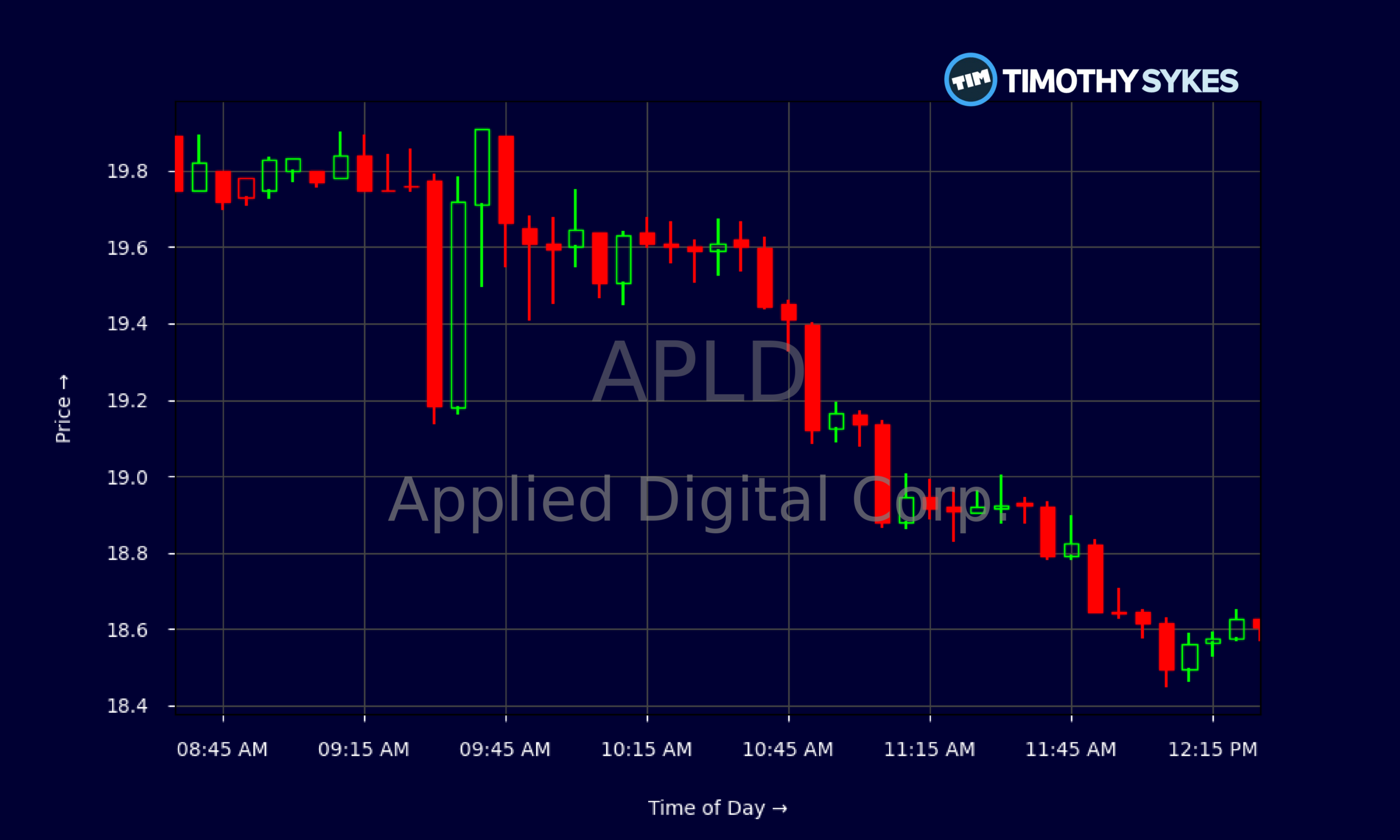
Live Update At 12:32:20 EDT: On Friday, October 16, 2026 Applied Digital Corp. stock [NASDAQ: APLD] is trending down by -8.88%! Discover the key drivers behind this movement as well as our expert analysis in the detailed breakdown below.
Quick Financial Overview
APLD has been trading like a textbook momentum name that just hit a wall. Over the past few weeks, Applied Digital slid from the high-$20s to a recent close near $18.585, giving back a big chunk of its prior run. That’s a sharp reset, and traders need to treat it as such.
On the daily chart, APLD topped near $29 around 2026/09/22 and has since stair‑stepped lower, with a series of lower highs from $28, then $27, then $26, then low‑$20s. That pattern screams downtrend. The intraday tape on the latest session shows tight, choppy action between roughly $18.45 and $19, with failed attempts to reclaim $19.50. That’s not aggressive selling, but it is clear supply overhead.
More Breaking News
Fundamentals under the hood support this caution. Applied Digital reported Q1 adjusted loss of $0.01 per share, so the company is still not profitable. Yet APLD carries a massive enterprise value around $9.70B and trades at a sky‑high price‑to‑sales ratio near 451.9. Revenue of about $611.3M and strong liquidity metrics (current ratio 5.4, quick ratio 4.2) show fuel for growth, but negative returns on equity and assets suggest that growth is not translating to earnings yet. For traders, that mismatch between story and numbers is the battleground.
Why Traders Are Watching APLD’s AI Infrastructure Story
APLD sits right in the middle of one of the market’s hottest narratives: generative AI infrastructure. That’s exactly why traders have been obsessed with Applied Digital’s chart. But the latest headlines are a reminder that story alone is not enough.
Rothschild & Co Redburn just launched coverage of APLD with a Neutral rating and a $22 price target. That target is above the current price, but not by a huge margin given how volatile APLD has been. The more important detail is the tone. The firm is cautious on the whole AI infrastructure theme, warning that credit markets are already pricing in risks that equity markets are still largely ignoring. When a research house talks like that, momentum traders should perk up.
APLD is lumped into what they call “neoclouds,” a group they’re outright negative on. Their view: earnings and valuations in this slice of the AI stack may be cyclically inflated. Translation for traders — a lot of these numbers may be peak‑cycle, not baseline. If hyperscalers slow their spending or flex their bargaining power, names like Applied Digital could see both revenue pressure and multiple compression.
That risk message lines up with the company’s own results. APLD is still posting an adjusted loss, even after the AI data‑center buzz and capital spending wave. With heavy capital expenditures and large long‑term debt on the balance sheet, Applied Digital is geared to continued build‑out. If that build‑out slows, the market will re‑price the story quickly. For day traders and swing traders, APLD has become a pure sentiment and liquidity play around this macro AI build‑out debate.
Conclusion
APLD is a classic high‑expectation, high‑risk story that just moved into a tougher phase. The stock’s slide from near $29 to the high‑$18s happened as the narrative around AI infrastructure shifted from “unlimited upside” to “watch the credit cycle.” Applied Digital still has strong liquidity and a sizable revenue base, but it remains unprofitable on an adjusted basis and is priced like a flawless growth engine.
For short‑term traders, that mix is both a threat and an opportunity. Any bounce toward the $22 price‑target zone highlighted by Rothschild & Co Redburn can turn into a crowded fade if the tape shows weak follow‑through. At the same time, APLD’s volatility and tight intraday ranges around support offer clean risk levels for disciplined trades.
This is where process matters. As Tim Sykes likes to hammer home, “Cut losses quickly and don’t believe the hype — let the price action prove the story.” As millionaire penny stock trader and teacher Tim Sykes, says, “The goal is not to win every trade but to protect your capital and keep moving forward.”. Applied Digital gives traders a live case study in that mindset. Respect the downtrend, define your risk around clear levels, and treat every move in APLD as an educational setup — not a promise. This article is for educational and research purposes only and is not investment advice.
This is stock news, not investment advice. Timothy Sykes News delivers real-time stock market news focused on key catalysts driving short-term price movements. Our content is tailored for active traders and investors seeking to capitalize on rapid price fluctuations, particularly in volatile sectors like penny stocks. Readers come to us for detailed coverage on earnings reports, mergers, FDA approvals, new contracts, and unusual trading volumes that can trigger significant short-term price action. Some users utilize our news to explain sudden stock movements, while others rely on it for diligent research into potential investment opportunities.
Dive deeper into the world of trading with Timothy Sykes, renowned for his expertise in penny stocks. Explore his top picks and discover the strategies that have propelled him to success with these articles:
- Penny Stocks Trading Guide
- Best Penny Stocks Under $1 to Buy Today
- Top 8 Penny Stocks to Watch on Robinhood
Once you’ve got some stocks on watch, elevate your trading game with StocksToTrade the ultimate platform for traders. With specialized tools for swing and day trading, StocksToTrade will guide you through the market’s twists and turns.
Dig into StocksToTrade’s watchlists here:





Leave a reply