

Diamondback Energy Inc. stocks have been trading up by 4.27 percent amid bullish sentiment on strengthening crude oil prices.
What Traders Need To Know
- Scotiabank started coverage on Diamondback Energy with an Outperform rating and a $250 target, leaning on strong free cash flow and efficient operations despite macro risks.
- Major banks, including BMO, Morgan Stanley, Jefferies, Roth, and JPMorgan, all raised price targets, leaving the Street’s average in the mid‑$230s against a spot price near $200.
- Morgan Stanley flagged Diamondback Energy’s preliminary 2027 plan as a key focus for the upcoming Q3 update with oil trading close to $100 per barrel.
- The company posted strong Q3 realized commodity prices but also sizable hedging losses, reminding traders that derivatives can distort reported results.
- Insider Charles Alvin Meloy sold 33,333 shares for about $6.1M but still holds roughly 788,000 shares, keeping a large economic stake.
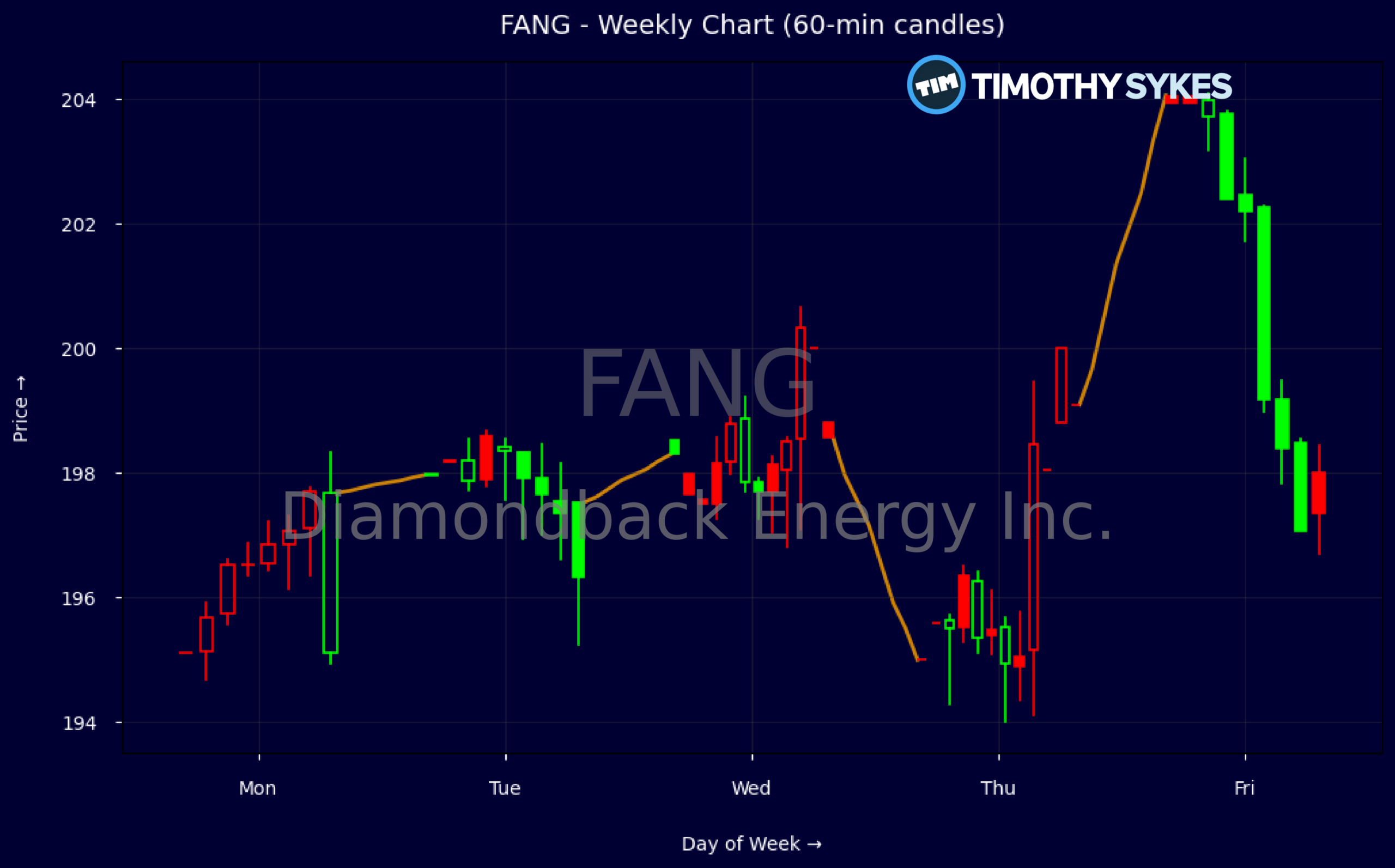
Weekly Update Oct 12 – Oct 16, 2026: On Friday, October 16, 2026 Diamondback Energy Inc. stock [NASDAQ: FANG] is trending up by 4.27%! Discover the key drivers behind this movement as well as our expert analysis in the detailed breakdown below.
Energy industry expert:
Analyst sentiment – positive
Diamondback Energy stands as a top-tier Permian E&P with scale, low-cost inventory and disciplined capital allocation. EBITDA margin above 40% and pre-tax margin of 37% confirm strong profitability versus most U.S. shale peers. Free cash flow of roughly $2.2 billion in the latest quarter, a P/FCF near 6x, and modest leverage (total debt-to-equity 0.33x, interest coverage 25.6x) support balance-sheet strength. The 2.25% dividend yield is well-covered despite negative working capital driven by efficient, lean current assets.
Technically, FANG remains in a firm intermediate uptrend, with weekly closes stepping higher from about $195 to $204 and strong support forming near $195. Intraday 5‑minute action shows consistent dip-buying and higher lows, with volume expanding on pushes above $200, indicating active institutional participation. A specific actionable level is $200: above this, traders can target $210 with tight risk; a decisive break below $195 would signal trend exhaustion and justify reducing exposure.
Fundamentally and relative to Energy and Fossil Fuels benchmarks, Diamondback offers superior free cash flow yield and capital efficiency, now validated by multiple bullish target hikes (JPM $253, Street average ~$236–238) and Scotiabank’s Outperform at $250. Near-term noise from hedging losses does not impair core economics. Sector tailwinds from strong oil prices and improving gas takeaway reinforce the outlook. I expect FANG to re-rate toward $230–240 over 12 months, with support near $195 and resistance at $210, then $225.
More Breaking News
Quick Financial Overview
Diamondback Energy Inc. (FANG) is trading just above $200 after a steady multi‑day grind higher from the mid‑$190s. The weekly tape shows a controlled uptrend, with closes climbing from about $195 to nearly $204, suggesting dip buyers are supporting the name. Intraday, the 5‑minute chart shows a tight range between roughly $199 and $204, with higher lows building through the session and a close near the top of the day’s range. That intraday pattern reflects quiet but persistent accumulation rather than panic or forced selling.
On the fundamental side, Diamondback Energy generated about $14.9B in revenue over the trailing period, with revenue growing at roughly 27% over three years and 31% over five years. Gross margin near 37% and an EBITDA margin in the mid‑40s show a strong cost structure for an E&P operator. Net margins just under 9% look modest, but heavy non‑cash items and hedge impacts matter here, especially given the disclosed derivative losses despite strong realized prices. Traders should separate core operating strength from mark‑to‑market noise when they read earnings headlines.
Valuation-wise, FANG trades around 3.2x sales and roughly 3.8x cash flow, with a price‑to‑free‑cash ratio near 6.1, which is lean for a company still growing this fast. The balance sheet is solid: total debt‑to‑equity of 0.33, interest coverage above 25x, and leverage below 2x support flexibility across the cycle. Book value per share sits around $135, putting the stock at roughly 1.4x book, reasonable for a high‑quality Permian player with good returns on equity near the low‑teens. A cash dividend rate of $4.40, implying a yield a bit above 2%, adds another support layer for swing traders looking at total return.
Conclusion
This is stock news, not investment advice. Timothy Sykes News delivers real-time stock market news focused on key catalysts driving short-term price movements. Our content is tailored for active traders and investors seeking to capitalize on rapid price fluctuations, particularly in volatile sectors like penny stocks. Readers come to us for detailed coverage on earnings reports, mergers, FDA approvals, new contracts, and unusual trading volumes that can trigger significant short-term price action. Some users utilize our news to explain sudden stock movements, while others rely on it for diligent research into potential investment opportunities.
Dive deeper into the world of trading with Timothy Sykes, renowned for his expertise in penny stocks. Explore his top picks and discover the strategies that have propelled him to success with these articles:
- Penny Stocks Trading Guide
- Best Penny Stocks Under $1 to Buy Today
- Top 8 Penny Stocks to Watch on Robinhood
Once you’ve got some stocks on watch, elevate your trading game with StocksToTrade the ultimate platform for traders. With specialized tools for swing and day trading, StocksToTrade will guide you through the market’s twists and turns.
Dig into StocksToTrade’s watchlists here:





Leave a reply