
Arm Holdings plc stocks have been trading down by -4.07 percent as investors react to weakening AI-chip demand expectations.
Key Takeaways
- Arm’s share price fell about 2% to $250.33 after news that Qualcomm secured a favorable jury verdict in a legal dispute between the companies.
- The ARM–Qualcomm conflict centers on alleged breaches tied to chip-testing tools and claims Arm threatened to terminate a critical license.
- Qualcomm aims to stop paying ARM royalties for up to five years, putting billions of dollars of potential revenue for Arm at risk and shaking confidence in its licensing model.
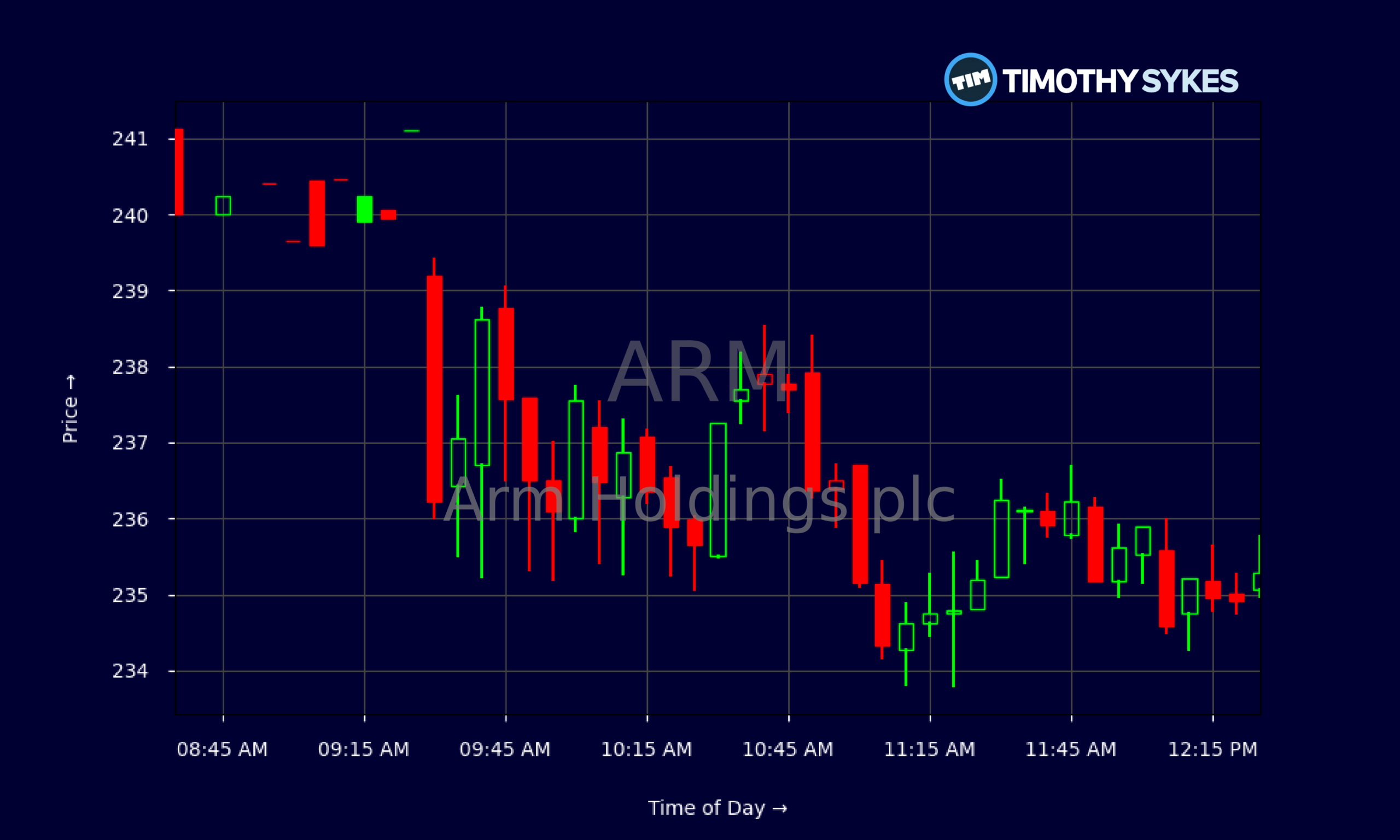
Live Update At 12:32:22 EDT: On Friday, October 16, 2026 Arm Holdings plc stock [NASDAQ: ARM] is trending down by -4.07%! Discover the key drivers behind this movement as well as our expert analysis in the detailed breakdown below.
Quick Financial Overview
ARM is a classic “great business, pricey stock” story running head‑first into legal risk. Revenue sits around $4.01B, but the market is valuing that at roughly 50.7 times sales and about 73 times free cash flow. For traders, that means ARM is priced for perfection. Any hit to the story, like the Qualcomm verdict, gets magnified in the chart.
Margins are elite. Gross margin near 97.9% and EBITDA margin around 27.8% show just how profitable ARM’s licensing engine is when royalty checks flow normally. Returns on equity above 12% and a light balance sheet — total debt to equity only 0.05, current ratio around 6 — give the company real financial stability.
More Breaking News
Now look at the tape. In late September, ARM was closing near $332.56, with spikes above $336.98. Since then, the stock has slid into the mid‑$230s, with 2026/10/16 closing near $234.8 after a string of lower highs from the $300s and $280s. Intraday action shows tight, choppy trading between $234 and $238, signaling indecision after a hard pullback. For active traders, ARM has shifted from momentum darling to headline‑sensitive, range‑trading name.
Why Traders Are Watching ARM’s Legal Drama
Traders are glued to ARM right now because the Qualcomm fight hits the company exactly where the premium comes from — its royalty stream. News that Qualcomm secured a favorable jury verdict knocked ARM about 2% down to roughly $250.33, and the chart action since then tells you the market is re‑rating legal risk, not just reacting to noise.
At the heart of this: Qualcomm is pushing to stop paying ARM royalties for up to five years. For a business built on collecting small fees from huge chip volumes, losing a top customer’s payments for that long means billions of dollars of potential revenue on the line. When a stock like ARM trades at rich multiples, traders assume those royalties are durable. This dispute challenges that assumption.
The accusations matter. Qualcomm claims ARM breached contractual obligations on chip‑testing tools and leaked threats to terminate a vital license. That kind of headline stirs deeper questions about how ARM manages relationships with key partners. If one heavyweight customer is in open conflict, traders start asking whether other licensing deals could be tested next.
On the chart, you see that fear showing up as lower highs: from the $320s–$330s to the $300s, then $280s, now $230s. ARM is still a large, profitable designer with strong margins and a clean balance sheet, but the tape reflects new uncertainty around future cash flows. For short‑term traders, ARM is now a legal‑headline momentum stock as much as a pure AI or mobile‑chip play.
Conclusion
For active traders, ARM is a textbook case of why you never fall in love with a story stock. The Qualcomm jury win and the looming trial over chip‑testing tools and license threats are not just legal footnotes; they go straight to ARM’s royalty engine. If Qualcomm succeeds in pausing royalties for up to five years, the “safe, recurring revenue” narrative that supports ARM’s premium valuation takes a real hit.
At the same time, the underlying fundamentals still show a high‑quality business. ARM carries minimal debt, piles of cash, and fat margins. That mix can attract dip‑buyers every time headlines cool off, which is why the intraday chart keeps showing tight ranges and sharp pops around news. Volatility is opportunity — but only for traders who manage risk without emotion. As millionaire penny stock trader and teacher Tim Sykes says, “Consistency is key in trading; don’t let emotions dictate your trades.” That mindset matters here, because chasing every headline without a clear plan is how traders turn a promising setup into a painful loss.
This is exactly the type of setup Tim Sykes talks about when he says, “Patterns repeat, but only for traders who are prepared and disciplined enough to act on them.” With ARM, the pattern right now is clear: legal headlines drive gaps, and rich valuation amplifies each move. For educational and research purposes, the lesson is simple — respect the chart, respect the catalyst, and never ignore legal risk when a company’s entire model depends on long‑term licensing deals.
This is stock news, not investment advice. Timothy Sykes News delivers real-time stock market news focused on key catalysts driving short-term price movements. Our content is tailored for active traders and investors seeking to capitalize on rapid price fluctuations, particularly in volatile sectors like penny stocks. Readers come to us for detailed coverage on earnings reports, mergers, FDA approvals, new contracts, and unusual trading volumes that can trigger significant short-term price action. Some users utilize our news to explain sudden stock movements, while others rely on it for diligent research into potential investment opportunities.
Dive deeper into the world of trading with Timothy Sykes, renowned for his expertise in penny stocks. Explore his top picks and discover the strategies that have propelled him to success with these articles:
- Penny Stocks Trading Guide
- Best Penny Stocks Under $1 to Buy Today
- Top 8 Penny Stocks to Watch on Robinhood
Once you’ve got some stocks on watch, elevate your trading game with StocksToTrade the ultimate platform for traders. With specialized tools for swing and day trading, StocksToTrade will guide you through the market’s twists and turns.
Dig into StocksToTrade’s watchlists here:





Leave a reply