

Fomento Economico Mexicano S.A.B. de C.V. stocks have been trading up by 6.55 percent following strong earnings-driven optimism
What Traders Need To Know
- UBS trimmed its price target on Fomento Economico Mexicano S.A.B. de C.V. to $130 from $139 while keeping a Neutral rating, suggesting moderated upside but no breakdown in fundamentals.
- Street consensus on FMX remains overweight, with an average target near $132.75, signaling that most analysts still see room above current levels.
- A CHF 300M, 5‑year bond issue at a 1.73% yield shows FEMSA can access low‑cost funding, supporting balance sheet flexibility and potential future capital moves.
- Q3 2026 earnings are scheduled before the open on 2026/10/28, with a Zoom call that could reset expectations and guide the next leg of price action.
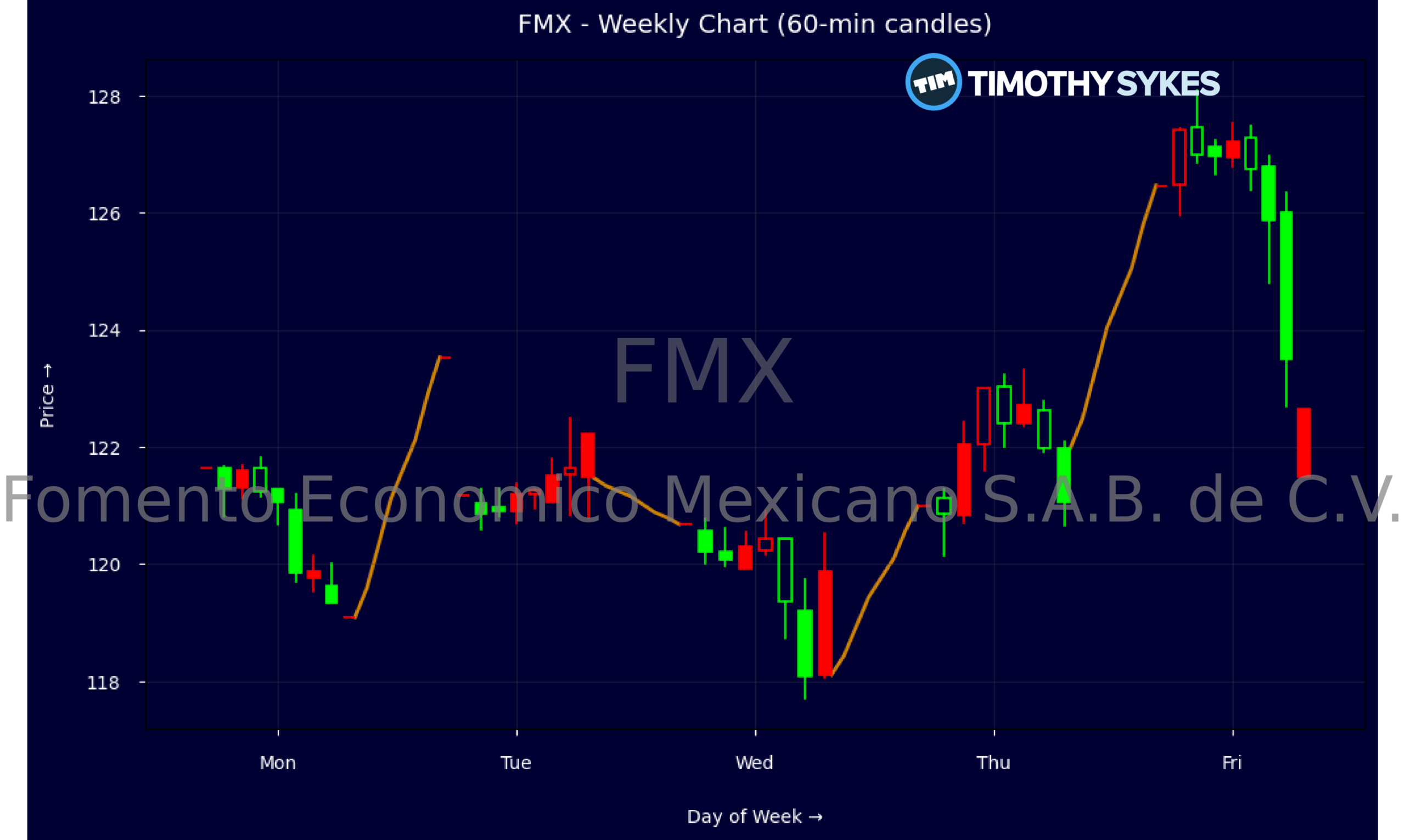
Weekly Update Oct 12 – Oct 16, 2026: On Friday, October 16, 2026 Fomento Economico Mexicano S.A.B. de C.V. stock [NYSE: FMX] is trending up by 6.55%! Discover the key drivers behind this movement as well as our expert analysis in the detailed breakdown below.
Consumer Staples industry expert:
Analyst sentiment – positive
FEMSA (FMX) remains a dominant Latin American consumer platform, with MXN 781.6bn in revenue but thin reported profitability (pre-tax margin ~6%, ROE just 1.1%, ROA 0.39%), depressed by restructuring and capital recycling. Yet the balance sheet is solid: MXN 128bn in cash, working capital of MXN 73bn, and long-term debt of MXN 127bn against equity of MXN 245bn, implying manageable leverage (ratio 3.3). The 2.2% dividend yield is sustainable but not compelling versus sector leaders.
Technically, FMX is in a short-term bullish phase: after consolidating near 121, the stock pushed to 123.53 then 126.46, printing successive higher highs and higher closes on rising intraday volume. The dominant trend on the weekly tape is up, with 121–122 emerging as key support from recent congestion and prior closes. A clear actionable level is a buy zone on pullbacks toward 122 with a stop below 119, targeting 130 near prior resistance.
Near term, catalysts are skewed moderately positive. UBS trimming its target to 130 with Neutral contrasts with a bullish street consensus around 132.75, while the CHF 300m 5-year bond at 1.73% underscores strong market access and declining funding costs versus many Consumer Staples peers. Versus global non-alcoholic beverage benchmarks, FEMSA trades richer on P/E (86x) but carries superior growth optionality in OXXO and digital. Risk-reward is favorable above 121, with resistance at 130 and medium-term upside toward 135.
More Breaking News
Quick Financial Overview
Fomento Economico Mexicano S.A.B. de C.V. (FMX) has been grinding higher on the weekly tape, with price moving from the low $120s to around $126–$127. The recent weekly close near $126.46 puts the stock just below the $130 UBS target and slightly under the broader $132.75 consensus. For traders, that gap defines a short‑term upside band where reactions to headlines and earnings will matter more than long‑term narratives.
Intraday, FMX showed steady intraday buying, opening in the low $120s and pushing into the high $120s by the close. The 5‑minute chart shows higher lows and strong demand into the afternoon, with multiple holds above $126 and spikes toward $127–$128. That intraday structure points to dip‑buying behavior, not distribution, suggesting that pullbacks toward the mid‑$120s may attract short‑term support unless fresh negative data appears.
On the fundamentals, FEMSA posted roughly $781.6B in revenue with a price‑to‑sales ratio near 0.81, which is modest given the scale. The P/E near 86.2 is rich, telling traders that sentiment and future growth expectations are already priced in; disappointments can hit quickly. Balance sheet data show total assets around $795.9B and total liabilities of about $466.5B, with leverage of 3.3 and long‑term debt near $127B. The new CHF 300M bond at 1.73% supports this structure by lowering average funding costs and reinforcing its BBB+/A credit profile. A dividend yield around 2.18% adds some carry, but this is a trading vehicle, not a bond proxy.
Conclusion
This is stock news, not investment advice. Timothy Sykes News delivers real-time stock market news focused on key catalysts driving short-term price movements. Our content is tailored for active traders and investors seeking to capitalize on rapid price fluctuations, particularly in volatile sectors like penny stocks. Readers come to us for detailed coverage on earnings reports, mergers, FDA approvals, new contracts, and unusual trading volumes that can trigger significant short-term price action. Some users utilize our news to explain sudden stock movements, while others rely on it for diligent research into potential investment opportunities.
Dive deeper into the world of trading with Timothy Sykes, renowned for his expertise in penny stocks. Explore his top picks and discover the strategies that have propelled him to success with these articles:
- Penny Stocks Trading Guide
- Best Penny Stocks Under $1 to Buy Today
- Top 8 Penny Stocks to Watch on Robinhood
Once you’ve got some stocks on watch, elevate your trading game with StocksToTrade the ultimate platform for traders. With specialized tools for swing and day trading, StocksToTrade will guide you through the market’s twists and turns.
Dig into StocksToTrade’s watchlists here:





Leave a reply