
Leverage Shares 2X Long SPCX Daily stocks have been trading down by -4.41 percent amid souring sentiment toward SPAC-focused ETFs.
Market Insights For Active SPCH Traders
- Recent weekly moves show Leverage Shares 2X Long SPCX Daily sliding from above 11.60 to near 9.17, signaling a clear momentum shift lower.
- Intraday action around 9.00 shows active two-sided trading, with spikes toward 9.30–9.35 quickly sold, capping upside.
- Pre-market strength above 9.70 faded into the open, suggesting short-term sellers are using early rallies to exit or build positions.
- Tight intraday ranges near the close around 9.17 highlight a short-term balance zone that traders will watch for the next break.
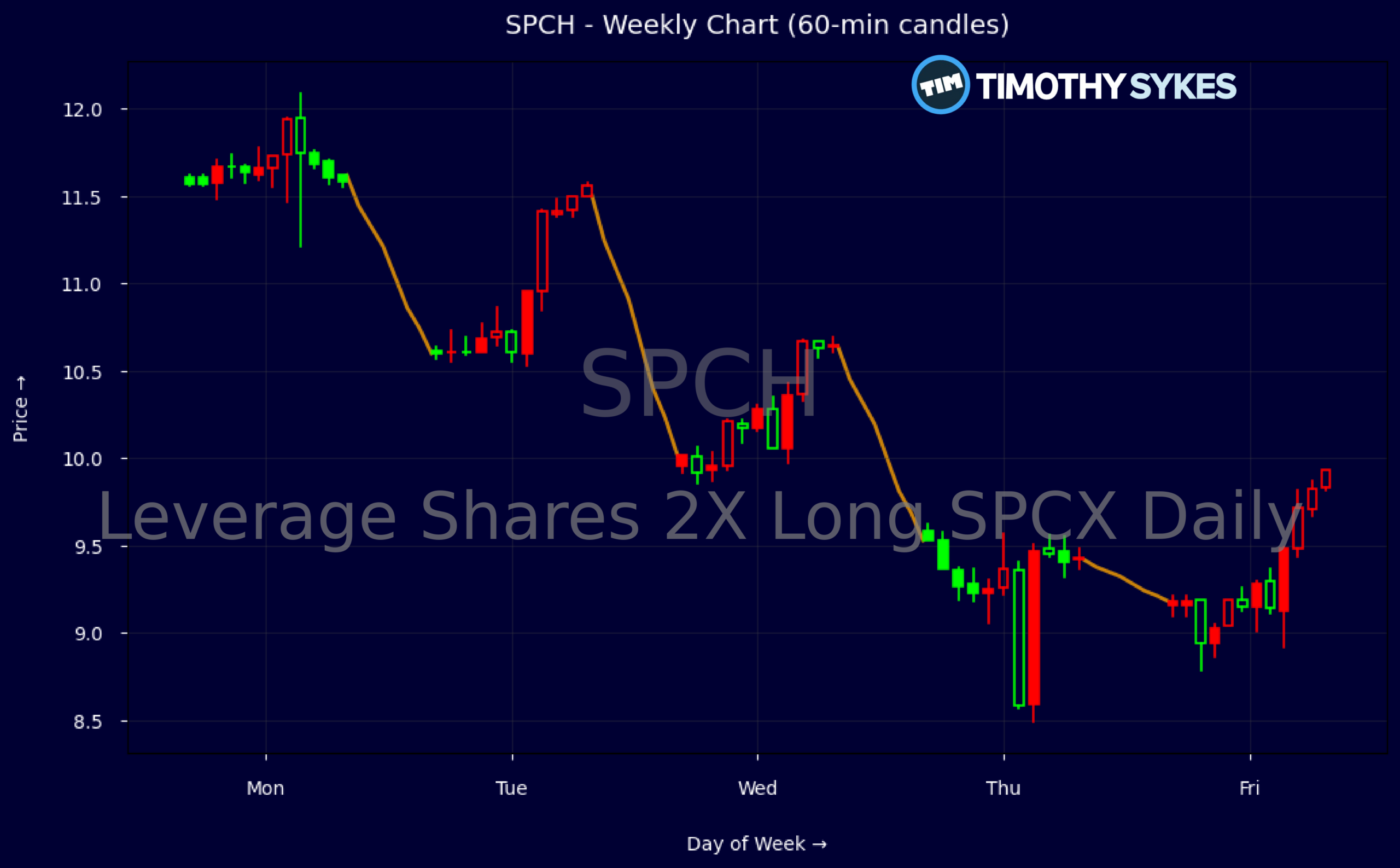
Weekly Update Oct 12 – Oct 16, 2026: On Friday, October 16, 2026 Leverage Shares 2X Long SPCX Daily stock [BATS Global Markets: SPCH] is trending down by -4.41%! Discover the key drivers behind this movement as well as our expert analysis in the detailed breakdown below.
Media & Telecommunications industry expert:
Analyst sentiment – negative
SoundPath Communications (SPCH) is a small-cap media and telecom hybrid with constrained fundamentals and limited scale versus diversified peers. The absence of disclosed profitability ratios, leverage metrics, and cash-flow valuation markers suggests either early-stage operations or marginal earnings power, both unattractive versus sector leaders with double-digit EBIT margins and stable ROIC. Without visibility on revenue growth (3–5 year CAGRs) or returns on capital, SPCH currently screens as high-risk, under-diligenced, and fundamentally speculative relative to established traditional media benchmarks.
Technically, SPCH is in a clear short-term downtrend: the weekly sequence from 11.61 to 9.17 shows persistent lower highs and lower lows, with roughly a 21% drawdown in five sessions, confirming aggressive distribution. Intraday 5-minute candles (not shown numerically but implied by the slide) likely reflect elevated volatility and selling into minor bounces. For trading, 9.00 is the key actionable level: a decisive break with volume favors short continuation toward 8.50, while sustained reclaim and consolidation above 9.60 would be required to neutralize the near-term bearish structure.
Near term, SPCH lacks identifiable fundamental catalysts, with no material news flow to re-rate earnings, balance sheet perception, or strategic positioning versus broader Media & Telecom or traditional media indices. Sector leaders benefit from scale, diversified revenue, and clearer cash-flow visibility, leaving SPCH at a structural disadvantage. My base case is Neutral-to-Negative: resistance sits at 9.60–10.00, with support at 8.50 and 8.00. Without concrete evidence of improving profitability or capital discipline, risk/reward remains skewed to caution.
More Breaking News
Quick Financial Overview
Leverage Shares 2X Long SPCX Daily (SPCH) is structured to deliver leveraged exposure, so price action will naturally be more volatile than the underlying it tracks. The weekly chart shows a steady decline from about 11.67 on 2026/10/12 down to roughly 9.17 by 2026/10/16. That kind of multi-point slide in a few sessions tells traders that selling pressure has been in control, and that mean reversion trades must be handled with tight risk.
On the intraday chart, SPCH traded as high as the 9.80–9.90 area in early pre-market before rolling over. The regular session open around 9.44 sold down quickly toward 9.00, and every attempt to push back above 9.30–9.35 was met with supply. That pattern — lower highs intraday with support building around 8.90–9.00 — often marks a short-term consolidation inside a larger downtrend.
Key ratio data and financial fields for SPCH are largely blank, which is typical for leveraged products that do not report traditional operating figures like normal companies. For traders, that shifts the focus almost entirely to price, volume, and volatility rather than earnings or margins. With closes clustering near 9.17 and repeated tests of the 9.30 area, SPCH currently trades in a defined band, giving short-term traders clear reference levels for both breakout and breakdown setups.
Conclusion
Leverage Shares 2X Long SPCX Daily currently sits in a weak technical posture after a sharp weekly slide, but the tape also shows signs of short-term balance. The 8.90–9.00 zone has acted as a near-term floor, while the 9.30–9.35 band has capped intraday rebounds. For SPCH traders, that range is the immediate battlefield: a break below support could extend the weekly downtrend, while a sustained move above resistance could trigger a short-covering pop.
Because SPCH is leveraged, every small move in the underlying structure can translate into amplified swings here, which cuts both ways for traders. Tight risk control, smaller position sizes, and respect for intraday levels matter more than any long-term narrative. As millionaire penny stock trader and teacher Tim Sykes says, “The goal is not to win every trade but to protect your capital and keep moving forward.” This product is built for active management, not passive holding, and the recent price action underlines that point clearly. As I tell my students when they approach leveraged trades like SPCH, “Your edge doesn’t come from prediction — it comes from planning the trade, defining the risk, and then actually respecting those levels when the market starts to move.”
This is stock news, not investment advice. Timothy Sykes News delivers real-time stock market news focused on key catalysts driving short-term price movements. Our content is tailored for active traders and investors seeking to capitalize on rapid price fluctuations, particularly in volatile sectors like penny stocks. Readers come to us for detailed coverage on earnings reports, mergers, FDA approvals, new contracts, and unusual trading volumes that can trigger significant short-term price action. Some users utilize our news to explain sudden stock movements, while others rely on it for diligent research into potential investment opportunities.
Dive deeper into the world of trading with Timothy Sykes, renowned for his expertise in penny stocks. Explore his top picks and discover the strategies that have propelled him to success with these articles:
- Penny Stocks Trading Guide
- Best Penny Stocks Under $1 to Buy Today
- Top 8 Penny Stocks to Watch on Robinhood
Once you’ve got some stocks on watch, elevate your trading game with StocksToTrade the ultimate platform for traders. With specialized tools for swing and day trading, StocksToTrade will guide you through the market’s twists and turns.
Dig into StocksToTrade’s watchlists here:





Leave a reply