
SK hynix Inc. stocks have been trading down by -4.68 percent amid reports of weakening global memory-chip demand.
Key Takeaways
- Micron Technology and SK Hynix shares fell 4.8% and 6.3%, respectively, after reports that China’s CXMT claimed a DRAM breakthrough and new 4F2 data center chip design due by year‑end.
- Pre‑market trading shows SKHY down over 6% after CXMT’s technology claims, highlighting intense competitive worries around future DRAM market share.
- Additional SK Hynix drops of 3.7% and 4% tracked Micron weakness as traders reassessed DRAM pricing power across the sector.
- ASML plans to raise EUV/DUV replacement‑part prices about 10% from 2027, pressuring SKHY’s long‑term equipment costs.
- SK hynix has reportedly accepted a 10% ASML spare‑parts price hike on consumables and key components, signaling higher ongoing operating costs for its fabs.
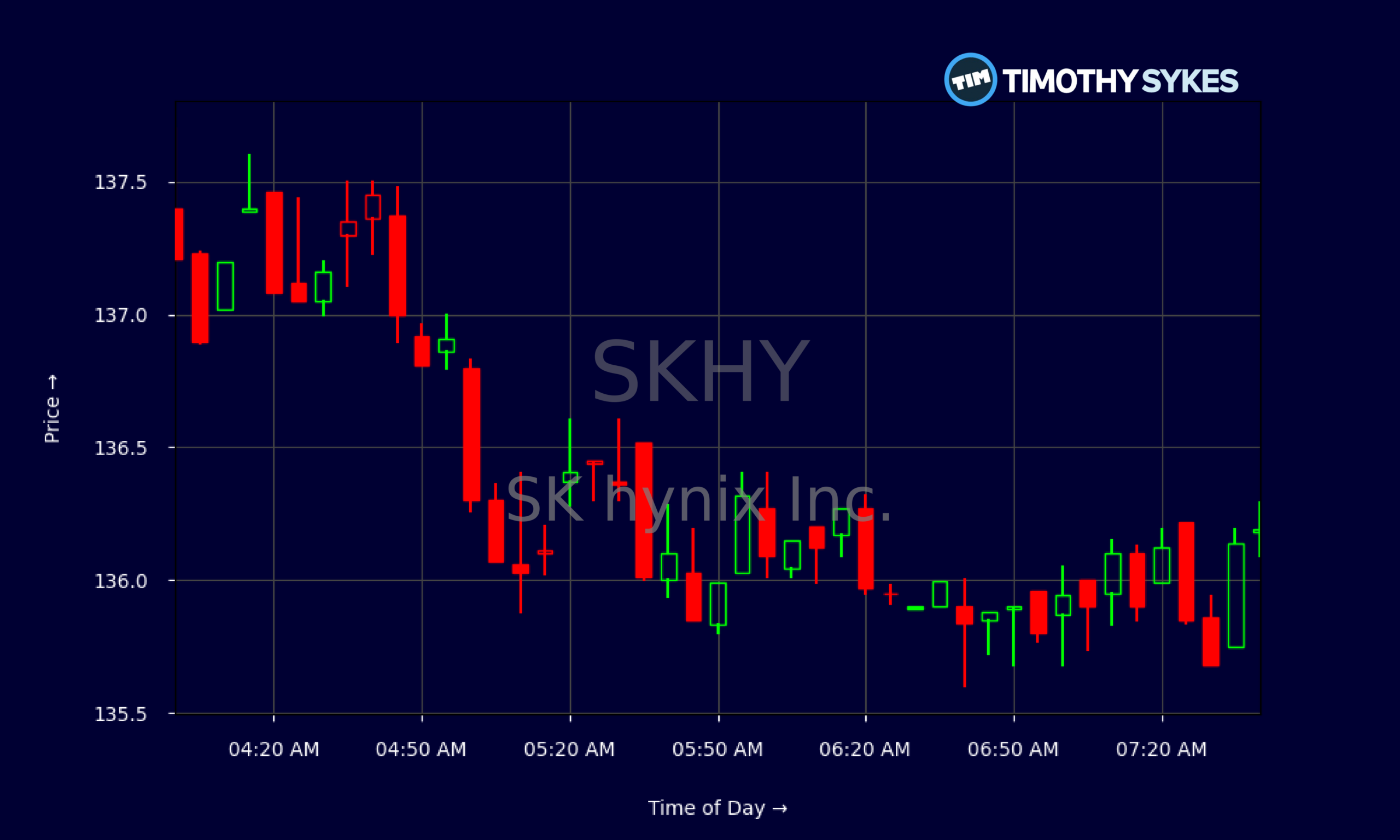
Live Update At 07:47:30 EDT: On Tuesday, October 20, 2026 SK hynix Inc. stock [NASDAQ: SKHY] is trending down by -4.68%! Discover the key drivers behind this movement as well as our expert analysis in the detailed breakdown below.
Quick Financial Overview
SKHY has gone from momentum favorite to falling knife on the chart. Just days ago, SK hynix Inc. was trading near the mid‑$190s; the recent close around $136.49 shows a brutal repricing. That is roughly a 30% drawdown from the 260925 close near $191.56, and the slide has accelerated over the last few sessions.
The daily data show SKHY rolling over from $195.13 on 261002 and $195.02 on 261005, then steadily leaking to $142.87 on 261019. Each bounce has been sold. For short‑term traders, that’s classic downtrend behavior: lower highs, lower lows, and failed intraday rallies.
Intraday, the 5‑minute tape around the $136 area tells the same story. SKHY has been pinned in a tight range, with tiny upticks toward $136.40 getting slapped back. That kind of constrained action often signals trapped longs and active short selling.
More Breaking News
Fundamentals still look strong on paper. SK hynix posted revenue of about ₩97.1T, trades at a low price‑to‑earnings ratio of 3.76, and shows a punchy 73.54% return on invested capital. A price‑to‑sales ratio near 17.04 and price‑to‑book above 13, though, tell traders the stock was priced for perfection. When sentiment breaks in a high‑expectation name like SKHY, the downside can be fast and unforgiving.
Why Traders Are Watching SKHY Now
The current SKHY story is all about pressure from both sides of the income statement. On the top line, China’s CXMT claims a breakthrough in DRAM technology plus a new 4F2 data center chip design due by year‑end. That single headline knocked Micron by 4.8% and SK Hynix by 6.3%, and it did not stop there. Multiple follow‑ups show SK Hynix shares down more than 6% premarket, then dropping 3.7% and another 4% in sympathy with Micron as traders processed the same CXMT storyline again and again.
For active traders, that repetition matters. It tells you this is not a one‑and‑done news blip. The market is repricing what SKHY’s future DRAM market share and pricing power might look like if a Chinese rival really closes the technology gap. Every time CXMT’s “breakthrough” is mentioned, SK hynix Inc. and its peers bleed more.
On the cost side, SKHY is taking hits too. ASML plans to raise prices by about 10% on replacement parts for its EUV and DUV tools in South Korea starting in 2027. Reports say SK hynix has already accepted a 10% hike on ASML spare parts, including consumables and key components. That is not just a rounding error. For a memory maker, keeping fabs running is the lifeblood of the business, and higher tool‑related costs can grind away at margins over years.
Combine a possible DRAM price war with heavier equipment bills and you get the current SKHY tape: gap‑downs, heavy volume, and weak intraday bounces that attract short‑biased traders.
Conclusion
This SKHY pullback is a live case study in how fast sentiment can flip when a crowded tech name runs into real headline risk. On one side, SK hynix Inc. faces CXMT’s claimed DRAM breakthrough and a 4F2 data center chip roadmap that spooks the whole memory complex. On the other, the company is staring at higher long‑term operating costs after accepting a 10% hike on ASML spare parts, with more price rises flagged from 2027 for EUV and DUV replacement components in South Korea.
Yet the balance sheet behind SKHY is not falling apart. SK hynix sits on hefty total assets, strong equity, and tens of trillions of won in cash, with leverage that looks manageable and working capital that gives it room to maneuver. That is why traders are glued to the chart: big fundamental engine, but serious narrative shock. In such volatile phases, risk management and capital preservation become just as important as catching the next big move—As millionaire penny stock trader and teacher Tim Sykes, says, “It’s not about how much money you make; it’s about how much money you keep.”—a reminder that surviving narrative shocks matters more than nailing every trade.
For active traders, the key now is not guessing fair value. It is tracking how SKHY trades around support levels, gap zones, and intraday VWAP as new CXMT or ASML headlines cross. As Tim Sykes likes to say, “The market doesn’t care about your opinion, it cares about price action—respect the trend, cut losses fast, and always let the chart confirm the story.” This article is for educational and research purposes only and is not investment advice.
This is stock news, not investment advice. Timothy Sykes News delivers real-time stock market news focused on key catalysts driving short-term price movements. Our content is tailored for active traders and investors seeking to capitalize on rapid price fluctuations, particularly in volatile sectors like penny stocks. Readers come to us for detailed coverage on earnings reports, mergers, FDA approvals, new contracts, and unusual trading volumes that can trigger significant short-term price action. Some users utilize our news to explain sudden stock movements, while others rely on it for diligent research into potential investment opportunities.
Dive deeper into the world of trading with Timothy Sykes, renowned for his expertise in penny stocks. Explore his top picks and discover the strategies that have propelled him to success with these articles:
- Penny Stocks Trading Guide
- Best Penny Stocks Under $1 to Buy Today
- Top 8 Penny Stocks to Watch on Robinhood
Once you’ve got some stocks on watch, elevate your trading game with StocksToTrade the ultimate platform for traders. With specialized tools for swing and day trading, StocksToTrade will guide you through the market’s twists and turns.
Dig into StocksToTrade’s watchlists here:





Leave a reply